
Moderation
Defining when moderators should intervene publicly
Decide when a thread needs a visible moderator note, when to contact a member privately and how to explain an intervention briefly.
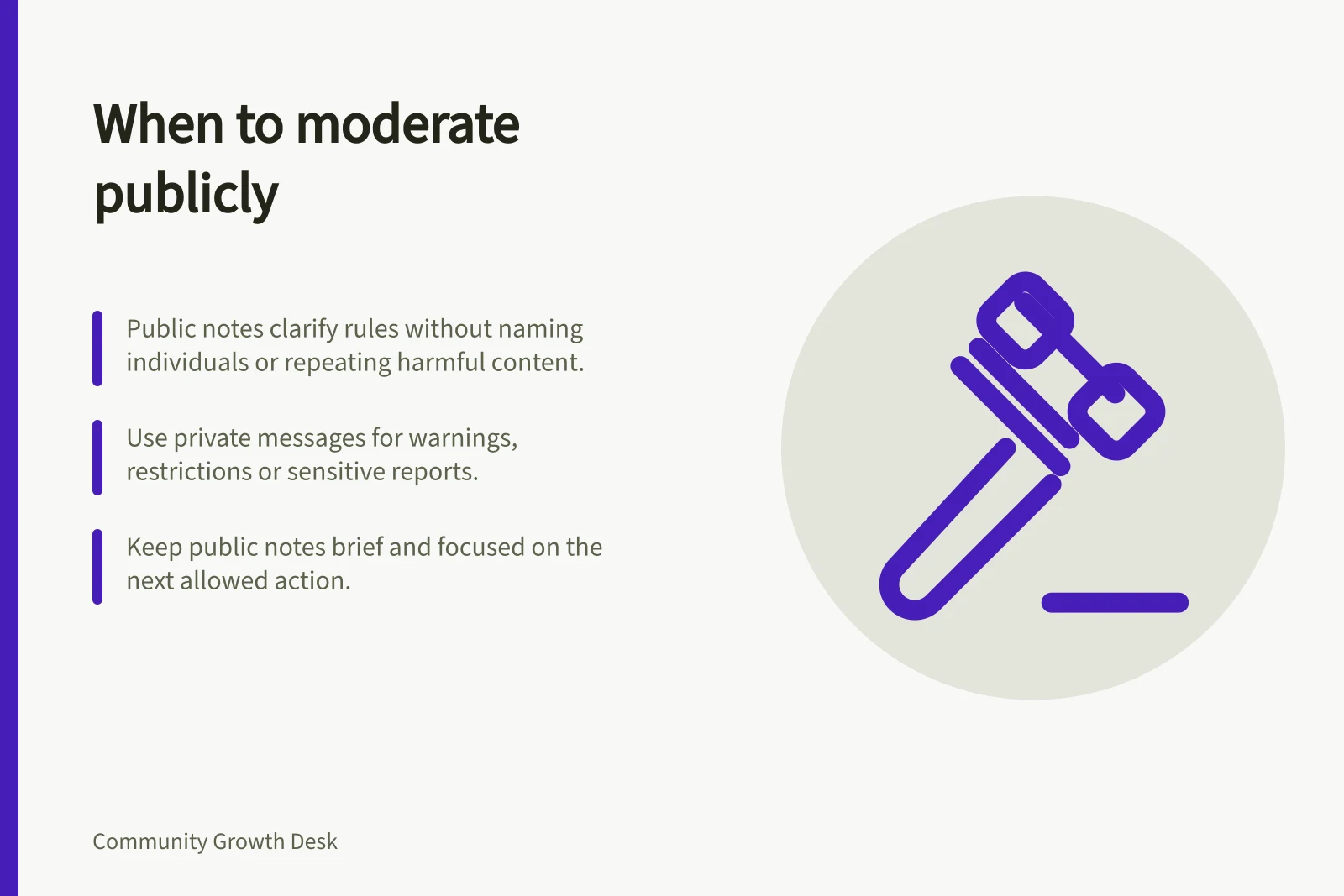
Intervene publicly when an active thread needs a visible boundary, or readers need to understand a visible moderation action. Use a private route for an individual warning, account restriction or sensitive report others do not need to see. A thread may need a brief public note while the member needs a fuller private explanation.
Decide what readers need to know
Before posting as a moderator, ask what the public message will change. Will it stop a pattern, clarify which discussion remains welcome or explain why a thread has paused? If only one member needs correction and nothing visible needs explaining, contact that person privately.
A public note may help when several participants are repeating the same breach. Keep it about the rule and the next permitted action. Do not judge someone’s character, name a reporter or repeat harmful material to explain its removal.
Choose the smallest useful public action
| Situation | Public action to consider | Private follow-up |
|---|---|---|
| A discussion is becoming personal but the topic remains useful | Briefly restate the boundary and invite replies on the issue. | Contact a participant if a specific edit is needed. |
| Content is removed and readers need context | State the applicable rule without reproducing the content. | Tell the author the reason and any available review route. |
| One member receives a warning or account restriction | Explain the thread’s state publicly only if readers need to know it. | Give the member the reason and next steps through an available private route. |
| Personal details or a threat appear | Limit further sharing promptly; post only the minimal public note needed for the thread. | Follow the safety procedure with the people who need the details. |
These are policy choices. Notice, removal, locking and private-contact controls vary by service and configuration, so check what the community can actually use.
Write the note for the next reply
A short note can say: “We’ve removed personal remarks. Please keep replies focused on how the proposed change affects your work.” If replies are paused, say whether discussion may resume and where an on-topic question belongs.
Avoid a public account of the investigation. State the boundary, the action readers can see and what they may do next. Give the affected member a separate explanation and any available review route without disclosing a reporter’s identity or sensitive details.
Check the thread afterwards
Read the next replies. If people return to the issue, the note may be enough. If the note becomes a new argument about an individual case, avoid debating that case in public.
Pause replies where the platform permits and direct individual questions to the stated private route. Record why the team chose a public response so similar cases can be handled consistently.