
Onboarding
Collecting product feedback without promising every request
Ask for the problem behind a product request, use honest review states and respond without making an unapproved delivery promise.
Ask customers what they were trying to do, what got in the way and how they manage now.
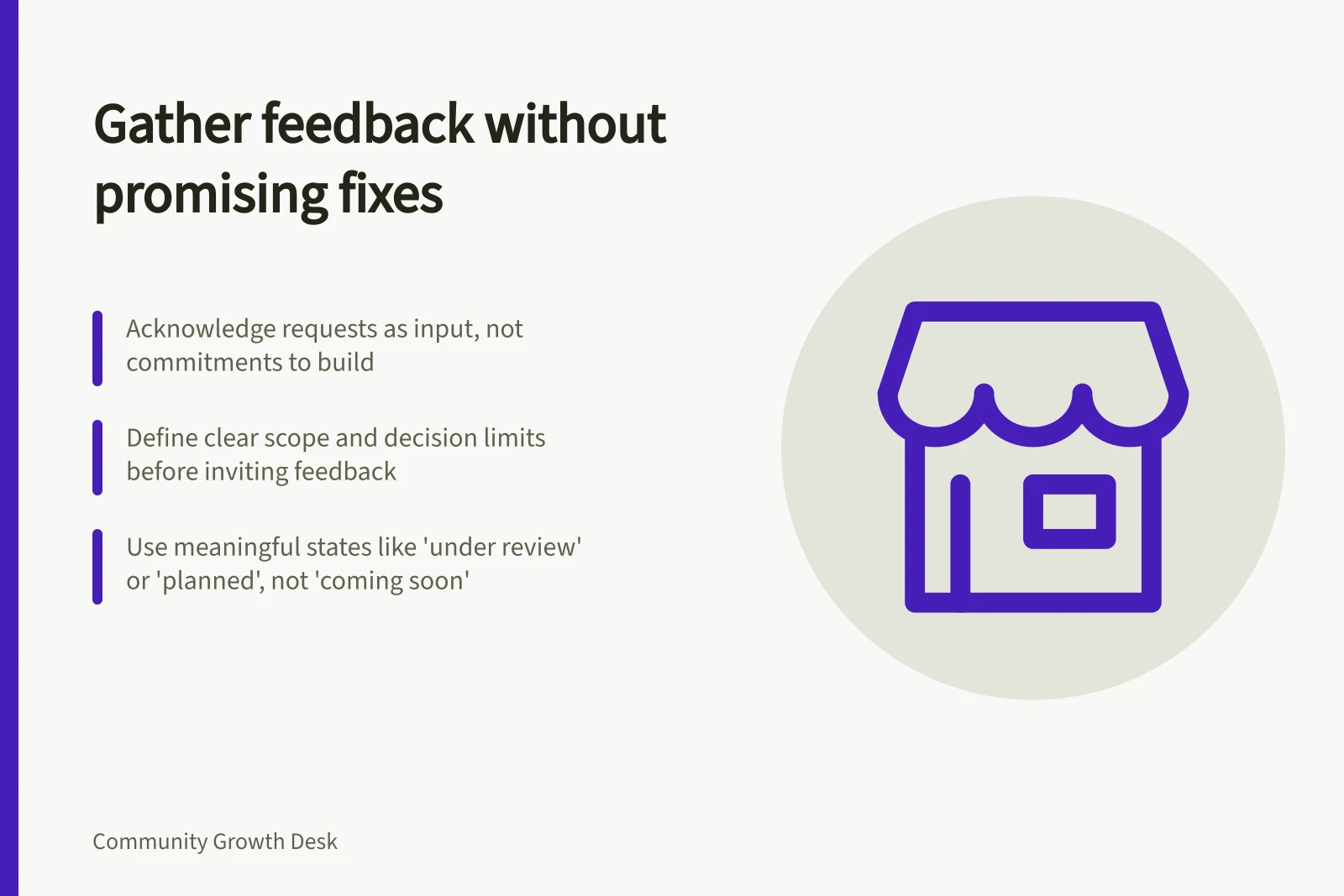
Acknowledge a product request as information for assessment, not a commitment to build it. Explain who will review it and how members will hear about a decision.
Frame the invitation honestly
Before opening a request thread, agree with the product team which decisions are open. State which product area is in scope, what evidence would help and what the discussion cannot promise.
Asking how to improve a workflow would mislead members if that workflow is already scheduled for retirement.
Ask about the task and circumstances first. “What were you trying to finish, where did you stop and what did you try instead?” may reveal several remedies.
An upvote or a feature name says less about the underlying problem. Provide a private route for sensitive account details; members should not have to publish them to make a useful report.
A moderator could reply: “Thanks for describing the difficulty. We will pass the task and example to the product team. We have not decided on a change or release date. If you are willing, tell us which step blocked you.”
Keep request states meaningful
Use states that reflect real decisions, such as received, needs more detail, under review, planned, released and closed without a change. Define who can move a request to “planned”. Until that decision is approved, leave it under review. Do not use “coming soon” merely to sound encouraging.
Keep the original problem, affected task, distinct customers who described it, relevant constraints and next owner in the request record. Combine duplicate suggestions without erasing different circumstances. Two members may both ask for an export change while facing different tasks that need different solutions.
Decide and respond with reasons
The product team can weigh customer impact, workarounds, technical and operational constraints, and fit with the product's direction. Votes show interest among participating members; they do not set a binding priority order. If the reach of a problem matters to the decision, check with customers who did not post before calling it widespread.
Return to the original discussion when a decision is made. State what was decided and what members can do now. If a request is declined, explain the relevant constraint without dismissing the problem.
If a change is released, say which part of the reported difficulty it addresses. If review continues, give a next review point only when the team can support it; do not turn that into an unapproved delivery date.
A clear decision lets members choose a workaround, provide missing context or understand the current product boundary.


