Onboarding
Part of Community launch planning
Writing a clear invitation for founding members
Write a founding-member invitation that explains the community, offers a specific first action and makes participation genuinely optional.
A founding-member invitation should explain why this person is being asked, what they can do in the new community and what commitment, if any, you are requesting. “Help us build engagement” describes the host’s goal; a specific conversation gives the invitee a reason to consider joining.
Start with a reason that fits the recipient
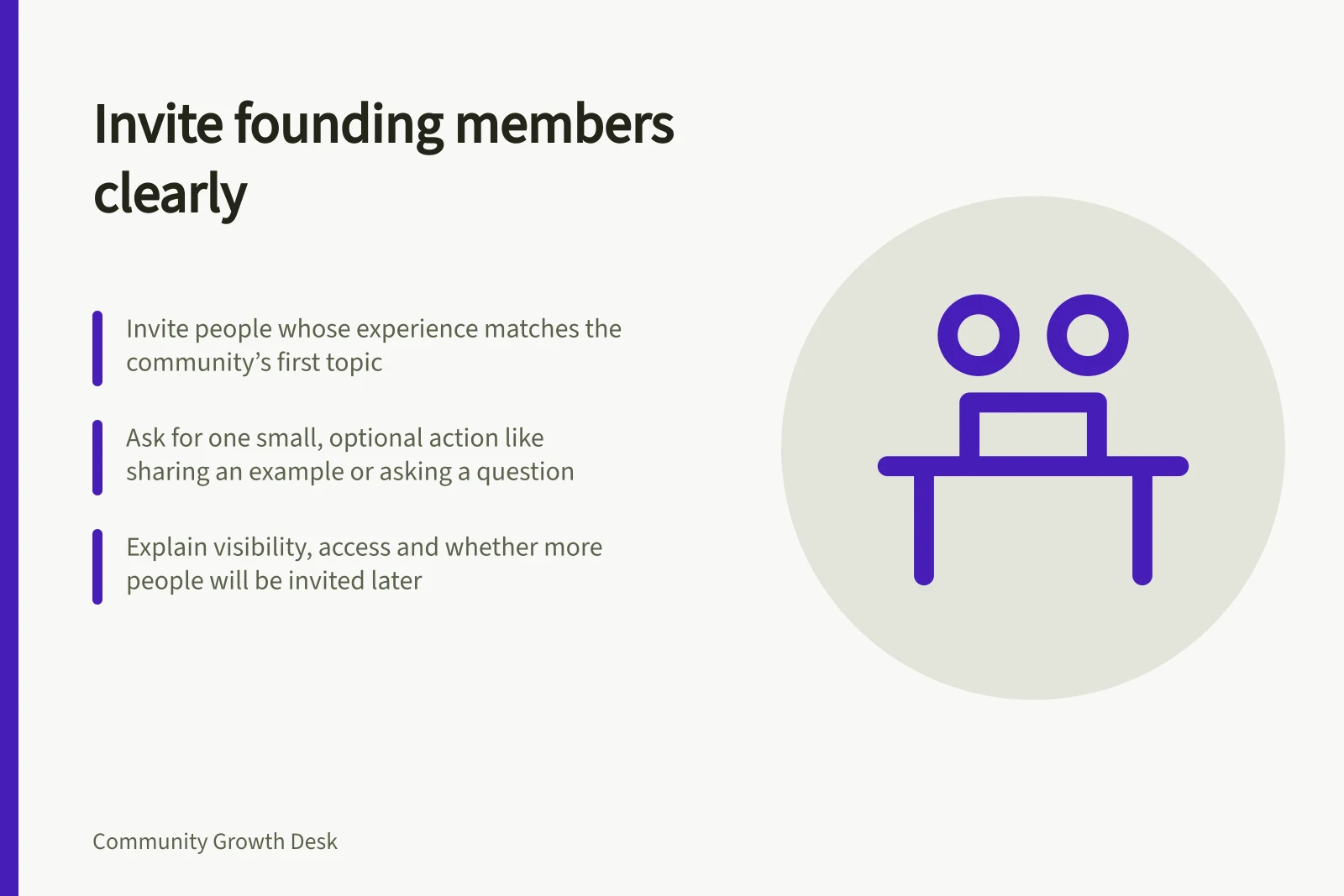
Write to someone whose experience relates to the community’s first topic. Refer to the task or perspective they may bring without implying that they owe the business a contribution. Do not quote a past private conversation or identify someone publicly without permission.
State the intended members and purpose in ordinary language. Then describe what will be available when they arrive: an opening discussion, a place to ask a question or a chance to compare approaches. If the space is a trial, call it a trial. If staff will answer product questions, explain what they can answer and where private account matters belong.
Make the request small and optional
Ask for one possible first action: read an opening topic, add a question or share an example if they feel comfortable. If you want advice on the community design, ask separately and explain how that feedback will be used.
Tell invitees whether the space is public or restricted, whether their posts will be visible to other members and whether the host plans to invite more people later. Check the actual access settings before making those statements. Mention joining steps that might surprise someone; a link alone does not explain the experience.
A founding label should not promise status, influence, special access or lasting recognition unless those arrangements are settled. It is enough to say they are among the first people invited.
Use a message someone can answer
For a hypothetical trial restricted to invitees, with staff available to reply, the invitation could read:
Hi Sam, we’re inviting a small group of people who train new staff in service businesses to try a discussion space. Your experience could add a useful perspective. Our first topic asks how teams handle questions that arise during a new starter’s first week. You’re welcome to read it, ask a question or share an example; posting is optional. During this trial, posts are visible to other invitees and our team will respond. If you’re interested, I can send the joining details. It’s fine to pass.
Check the promise before sending
Can the invitee tell who is present, what they might gain and what they are being asked to do? Remove vague benefits such as “exclusive networking” unless the team can describe the actual opportunity. Make sure the opening topic exists and that someone is ready to answer replies.
Use a contact method appropriate to the relationship and the communication permissions held. If someone accepts, welcome them into the promised activity without assigning an unagreed role.